
Willow Work & Basketry
Live and study willow basketry in Denmark · Højskolen Mors
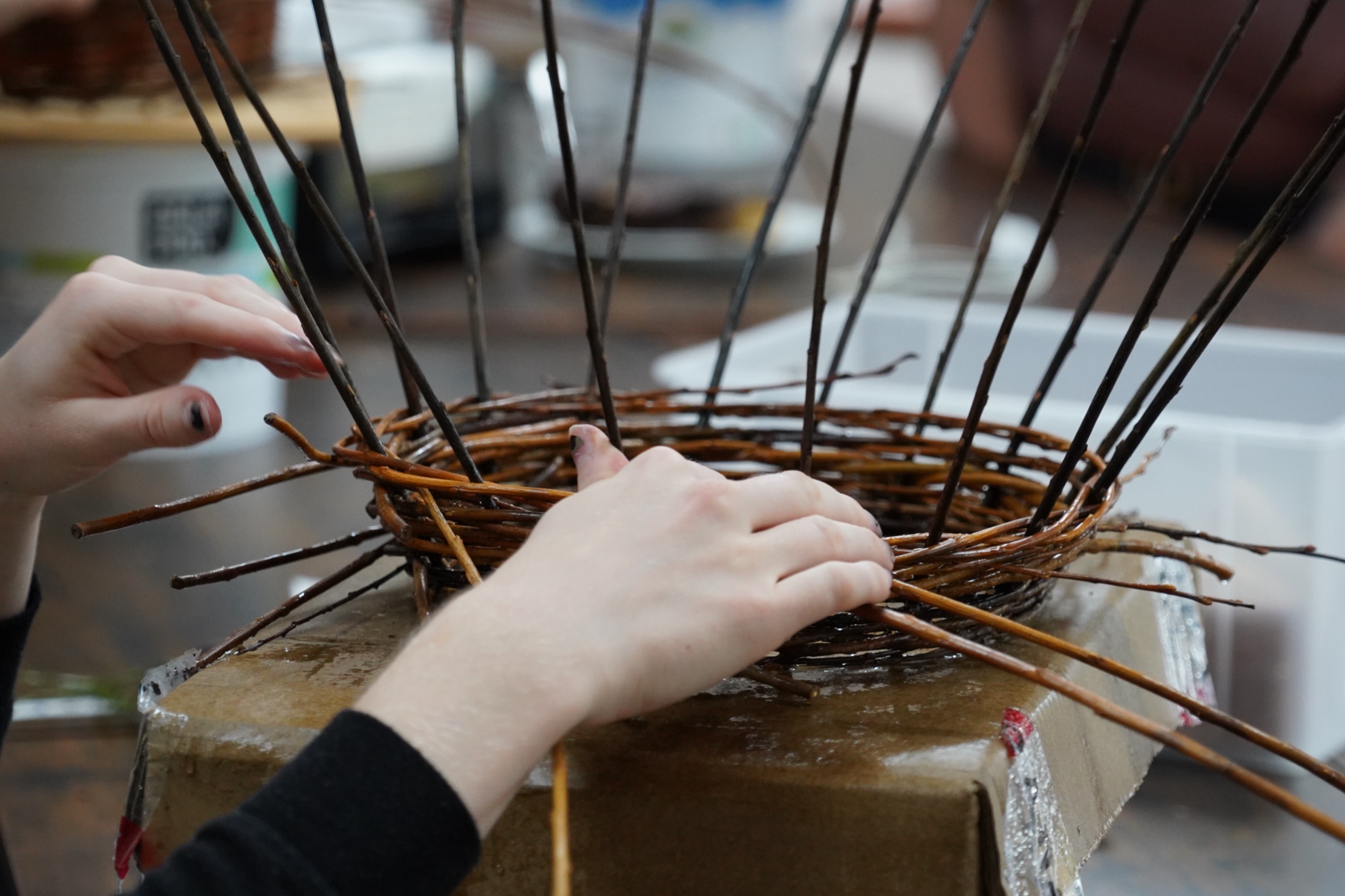
Weave your own willow basketsWillow Work & Basketry is a main subject at Højskolen Mors, a creative residential school on the island of Mors in Denmark (in Danish, a højskole), for you who want to learn an ancient craft and make beautiful, useful things with your own hands. Beginners are welcome, but we expect you to be curious, eager to learn and to give it everything in the workshop. You learn to weave baskets from willow: a round star base, stakes, different kinds of side weave and a solid flat border, and you decide yourself whether your basket gets a handle. You also get an introduction to growing and harvesting willow and inspiration for other natural materials. The teaching is in English. Your teacher is Maja Ingemann Nielsen, a trained outdoor guide who runs her own business making crafts in wood and willow. The subject takes up all of Friday and can be combined with Ceramics, Art & Creativity, Woodworking and Permaculture.
Updated November 2026
3 · Det laver du
What you do in Willow Work & Basketry
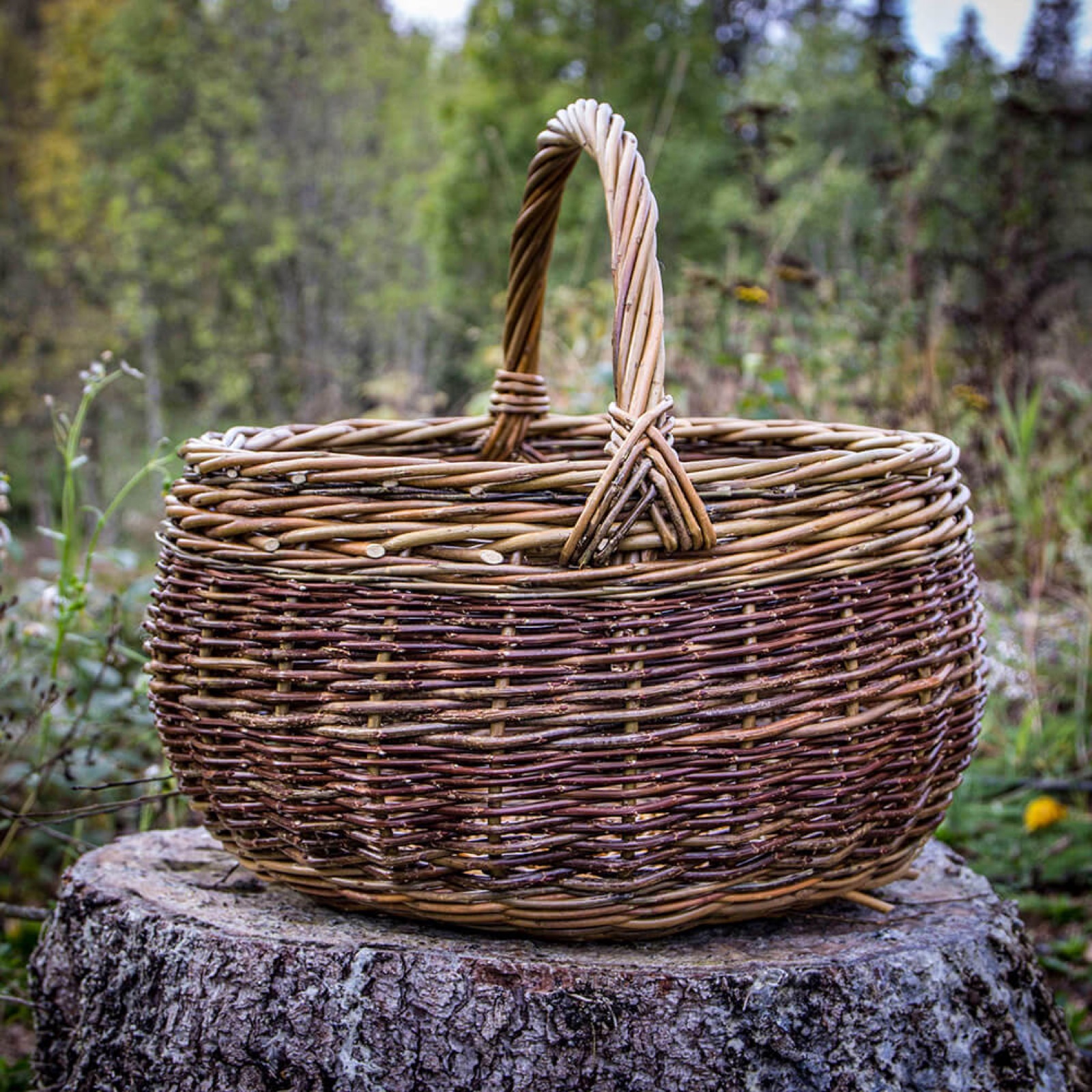
Willow work is about immersing yourself in creative, practical processes. You start by weaving a classic round basket with a handle, and from there there are lots of ways to vary both design and size. The classes alternate between shared instruction and individual guidance and feedback.
What you learn
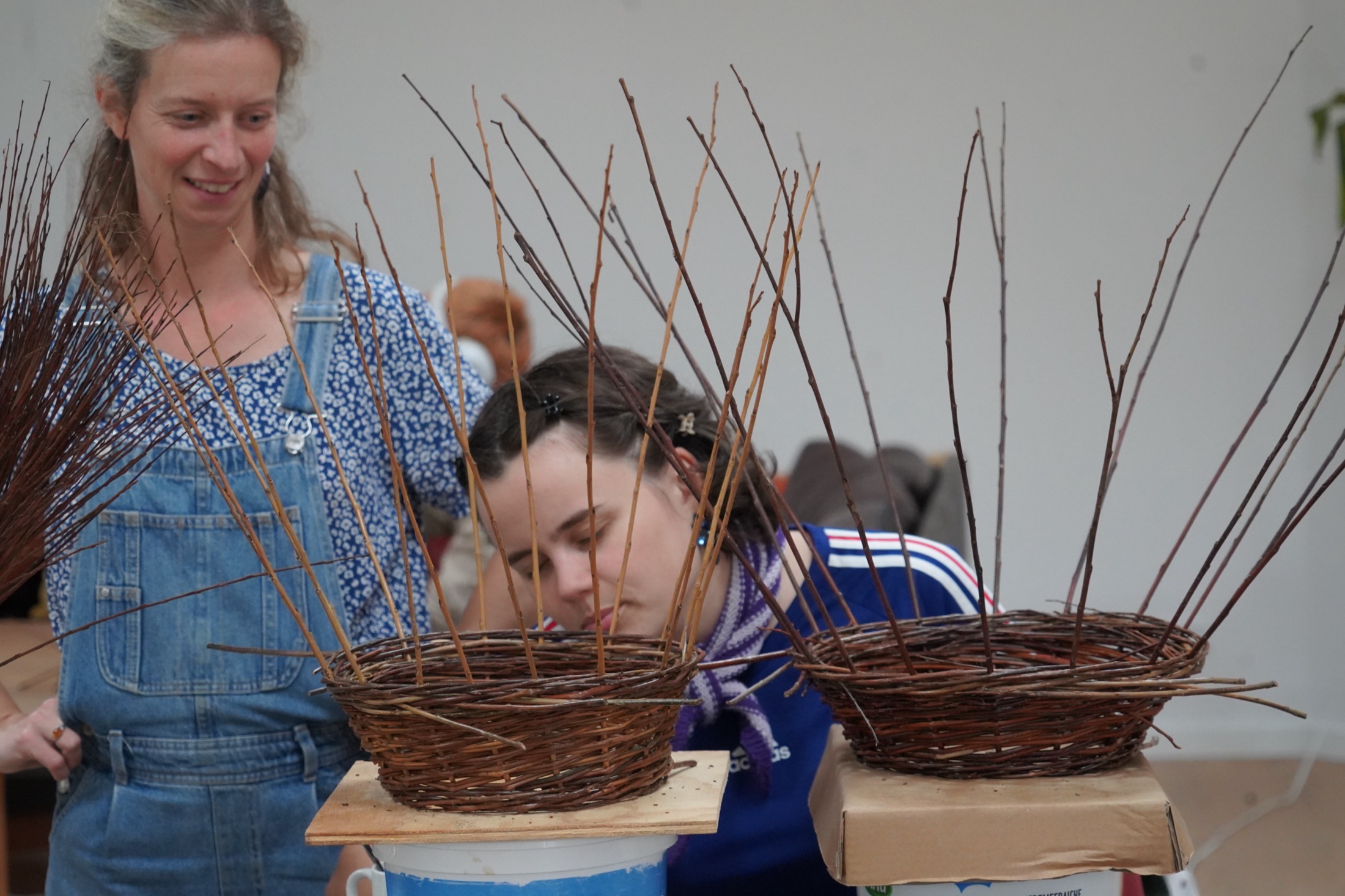
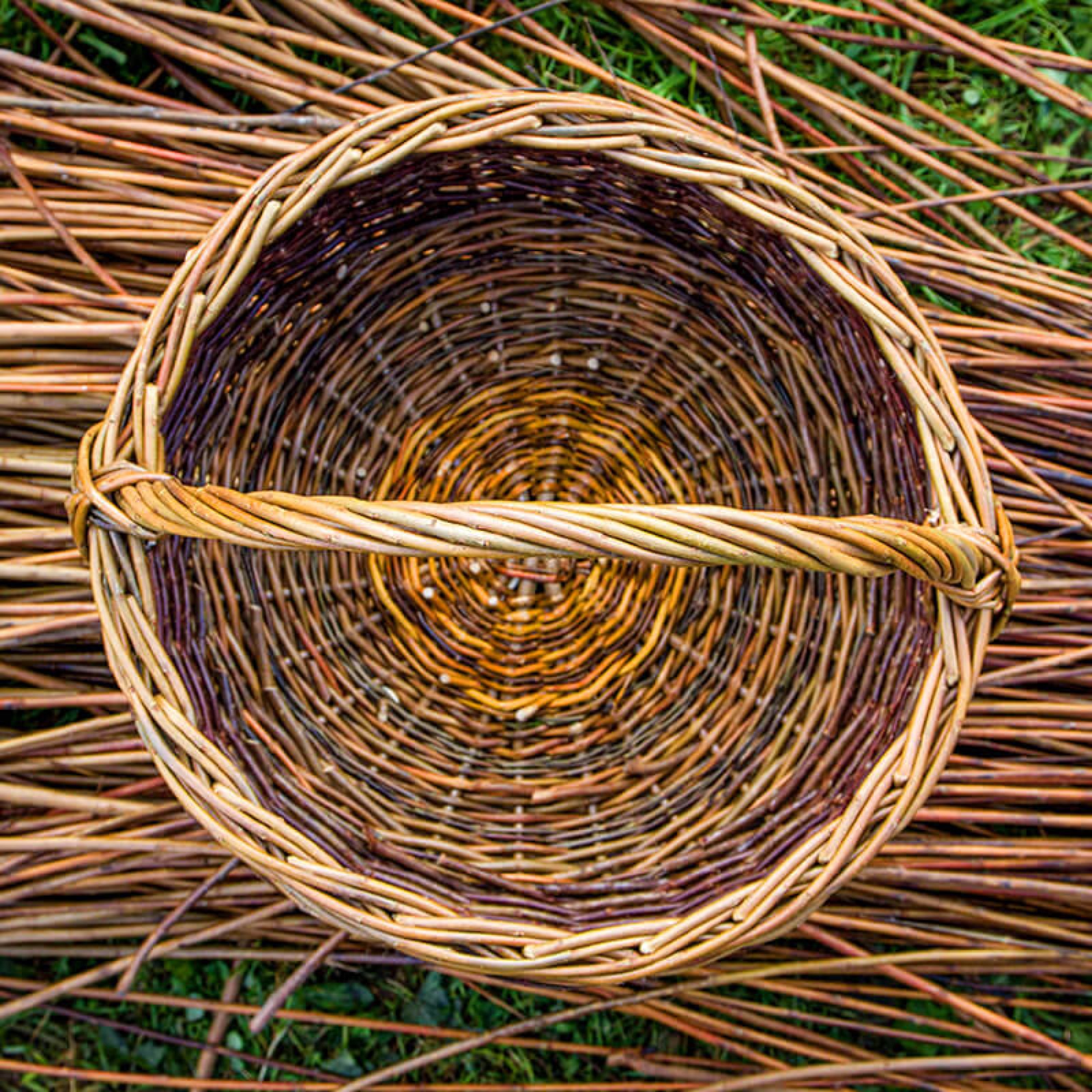
- Weaving a round star base and inserting the stakes
- Different kinds of side weave
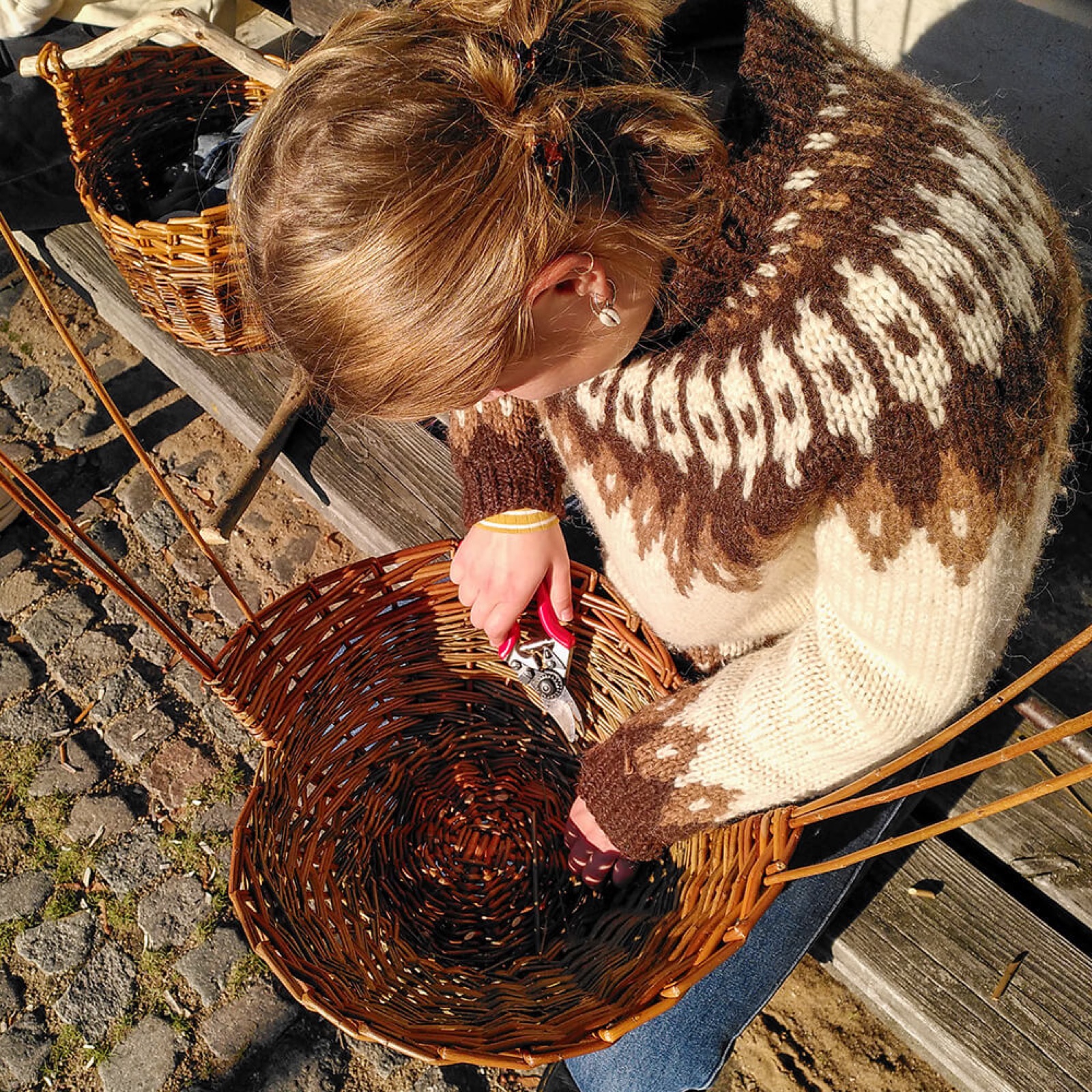
- Making a solid flat border
- A handle in willow, a leather strap or a branch
- Baskets in many sizes, colours and shapes, for example a mushroom basket, picnic basket, knitting basket and laundry basket
- Growing and harvesting willow
- Inspiration for other natural materials
Willow, a sustainable material
Willow is a wonderful, sustainable material that grows fast and gives long, strong and supple rods. For the basket maker, willow is a resource that year after year makes it possible to create beautiful things. A willow basket can last for many years, and when its time comes, it can become part of nature again. Working nature's materials with simple tools is something people have done for generation after generation.
From rods to basket
Your own willow baskets
First you learn to weave a classic round basket with a handle. From there you can vary design, size and colour and weave baskets for everything from mushroom picking and picnics to knitting and laundry. Every day new techniques and methods are introduced, which you work with in the group.
The classroom
Sneglehuset (the Snail House)
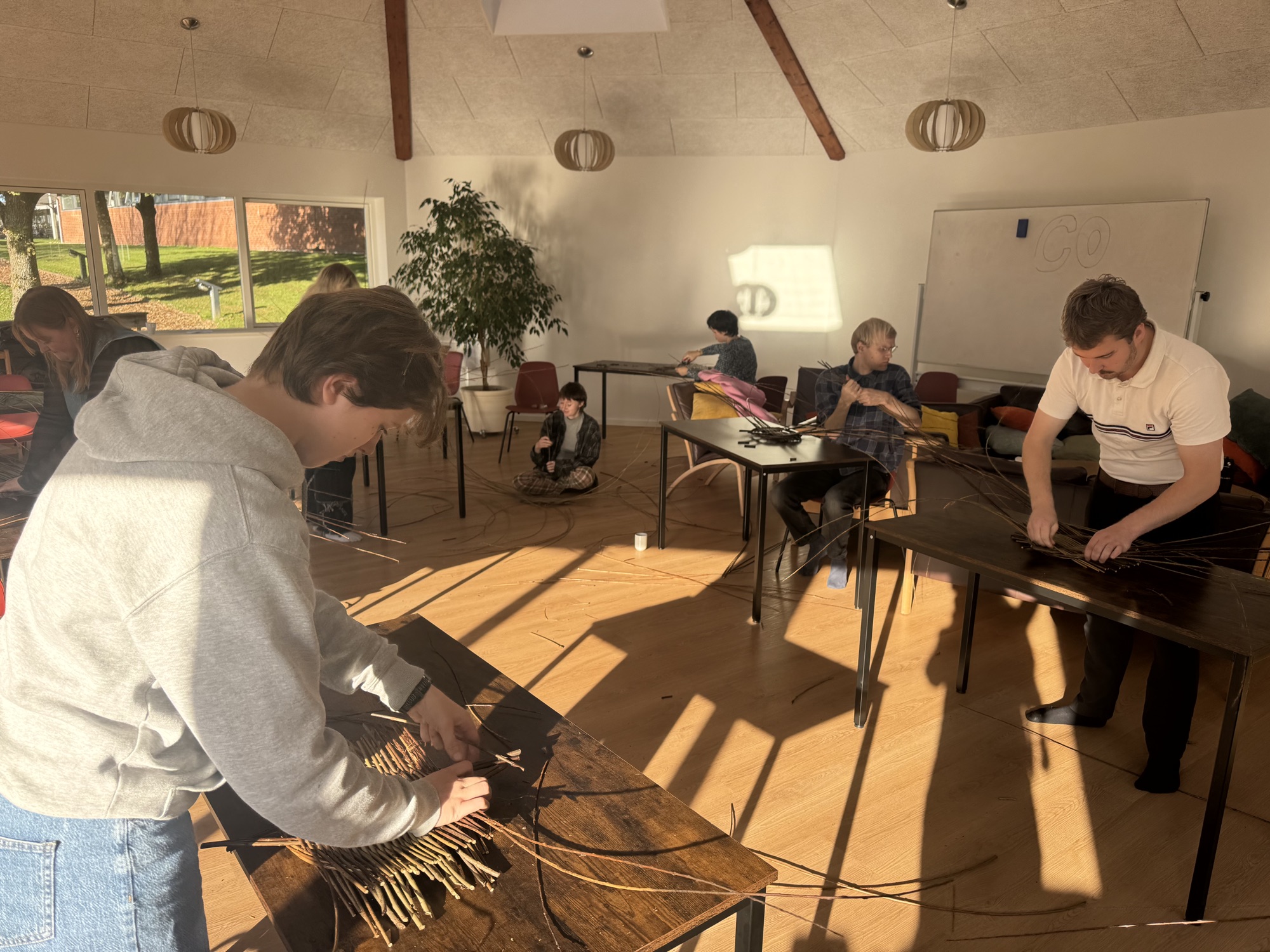
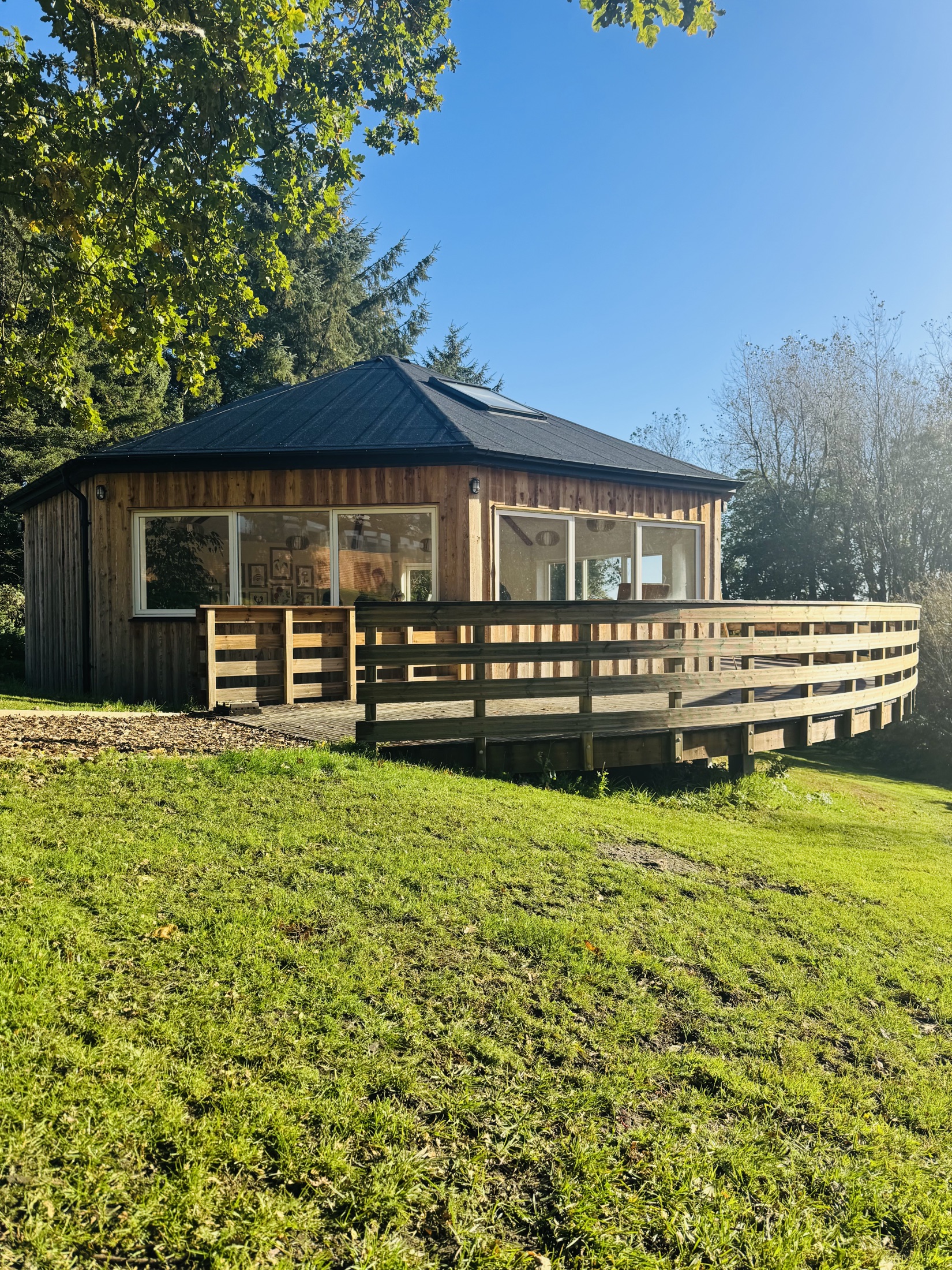
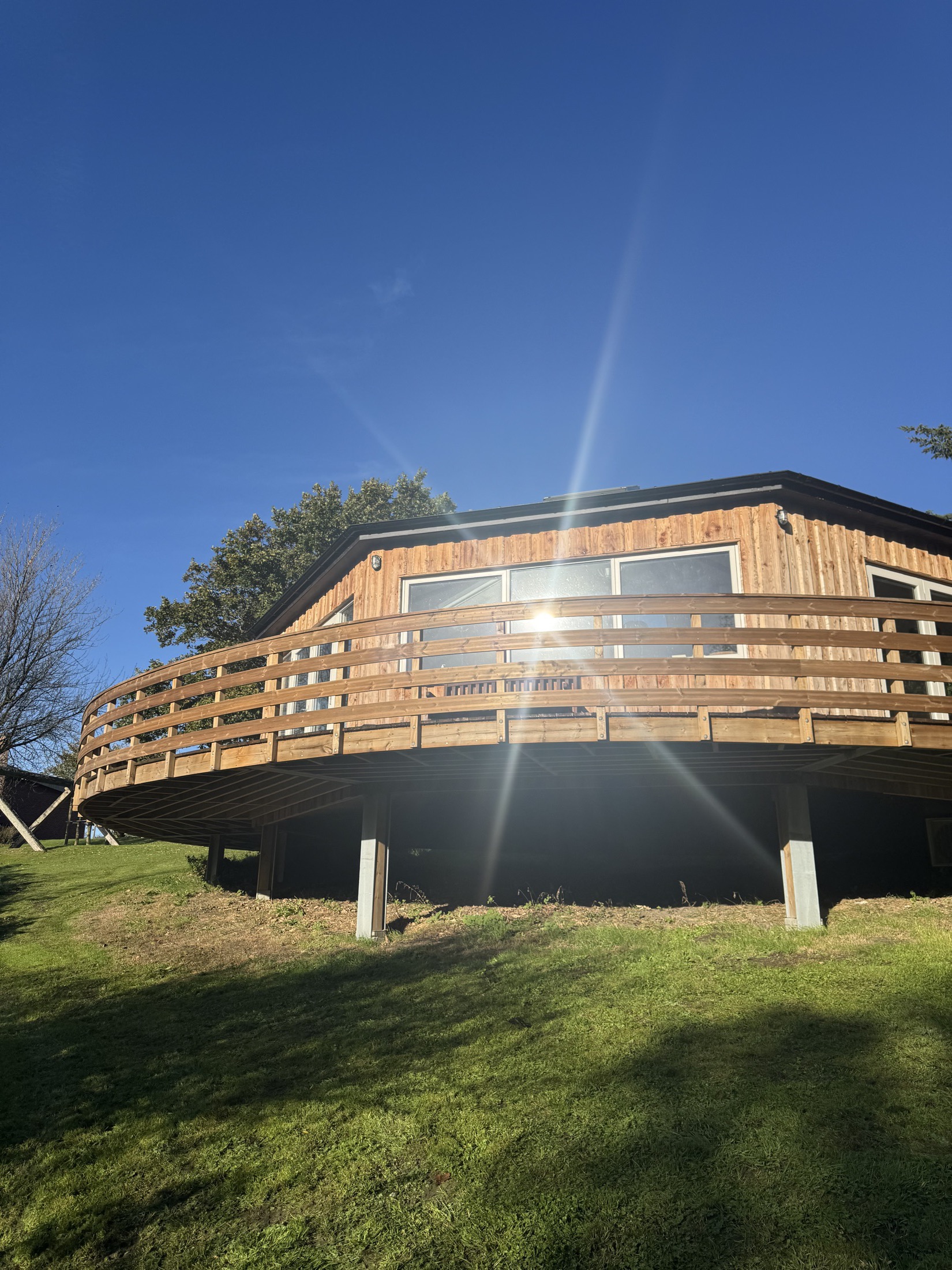
Willow Work takes place in Sneglehuset (the Snail House), the school's willow workshop. It is a wooden building with large windows, so there is plenty of light to work in, and a terrace all the way round, where you can sit outside and weave when the weather allows.
A rare subject
Willow Work & Basketry is a main subject at Højskolen Mors, so you can immerse yourself in the craft a whole day a week throughout your stay.
- Willow Work & Basketry all of Friday in both periods
- The classes take place in Sneglehuset, the school's willow workshop
- Shared instruction and individual guidance and feedback
- Growing and harvesting willow and inspiration for other natural materials
- Combine with Ceramics, Art & Creativity, Woodworking and Permaculture
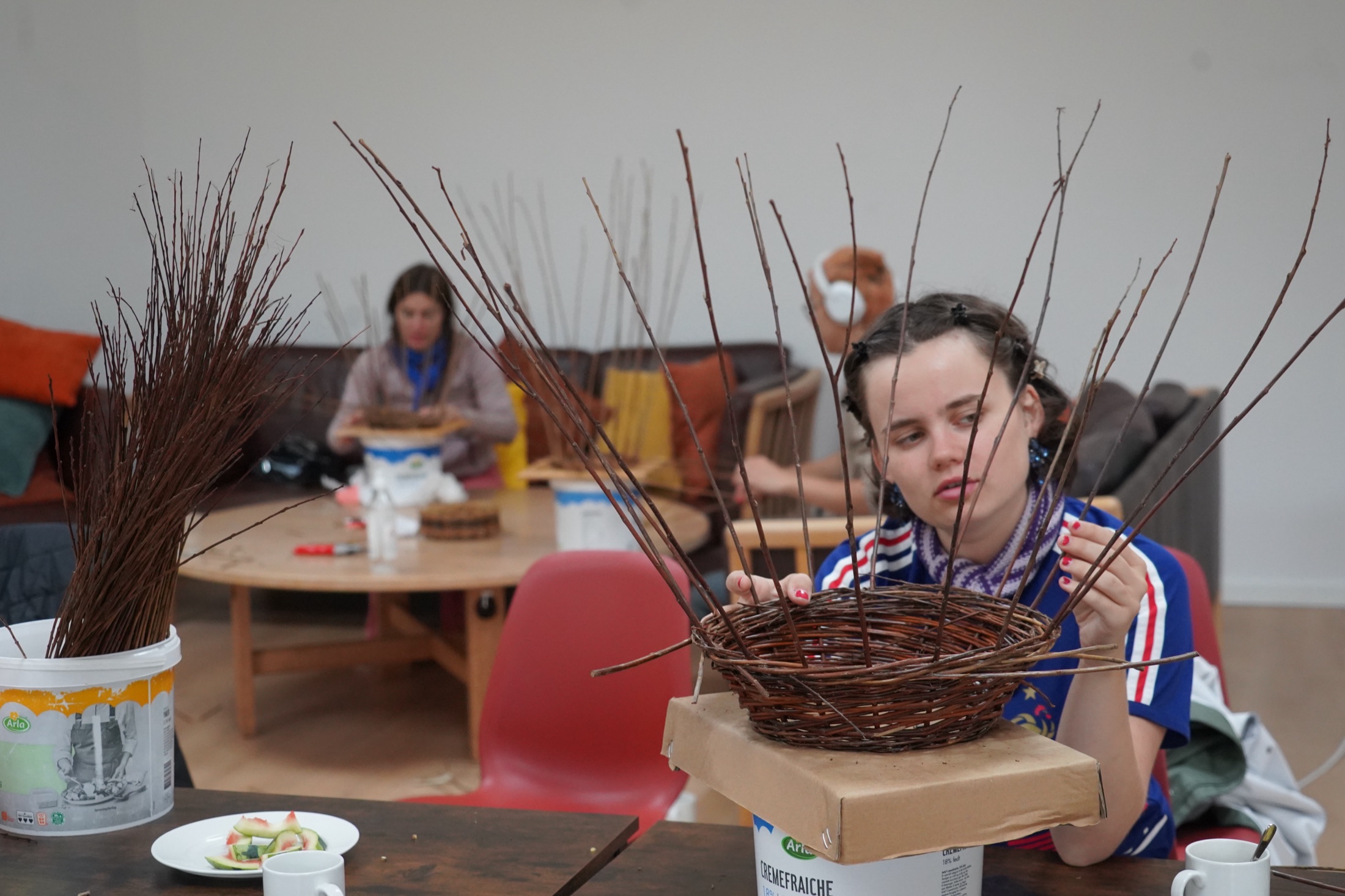
Immersion
An ancient craft, carried on
One whole day a week you can immerse yourself, learn new skills and be part of an inspiring, creative workshop.
4 · Din uge + kombinér med
An example week, spring 2027
Your week with willow work
Willow Work & Basketry takes up all of Friday in both periods. Here is an example for you who want a week full of craft and natural materials.
Monday
Tuesday
Wednesday
Thursday
Friday
Monday
Tuesday
Wednesday
Thursday
Friday
Want a week full of craft?
Combine willow work with clay, wood and soil
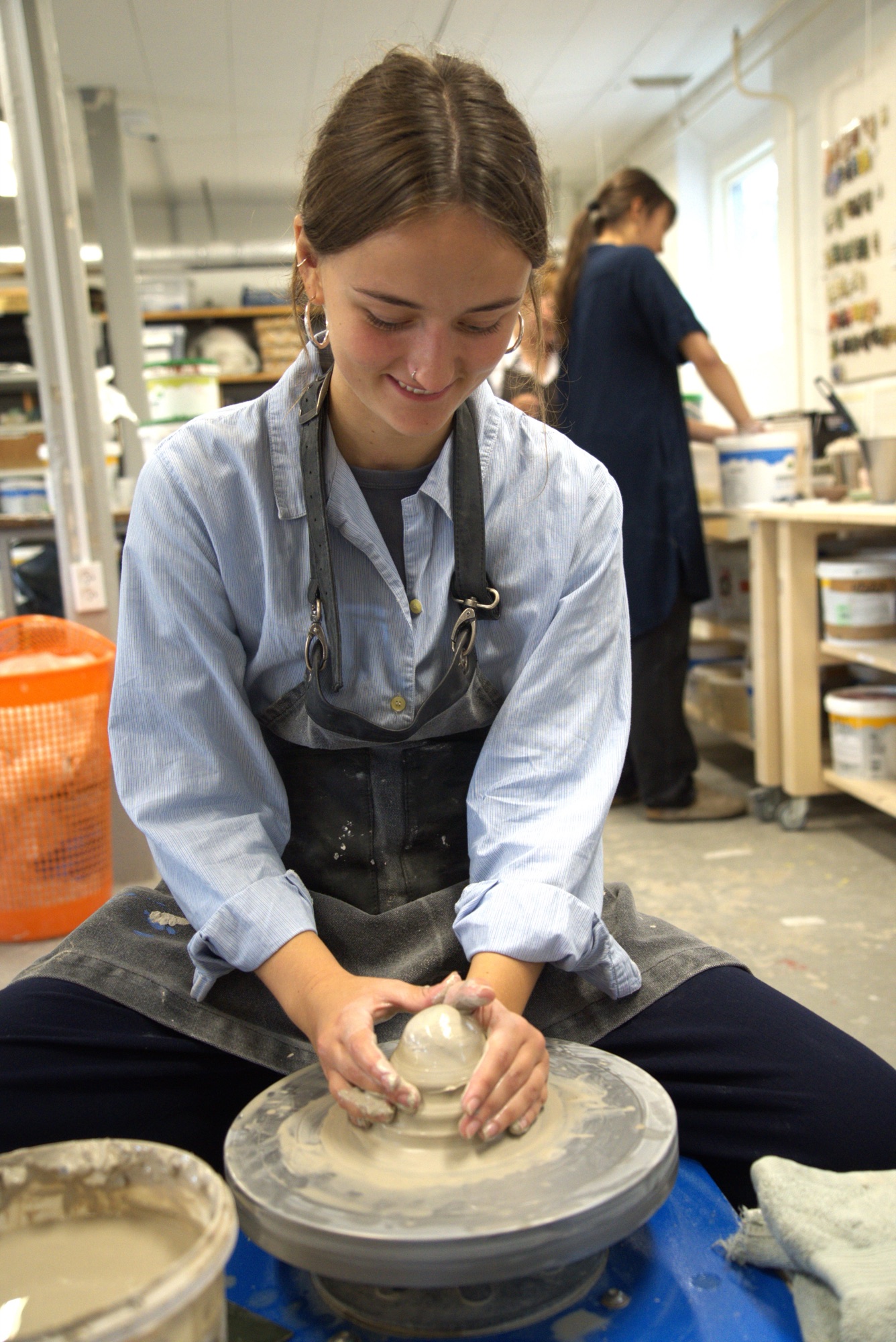
Ceramics & Pottery
Throw, glaze and raku fire.
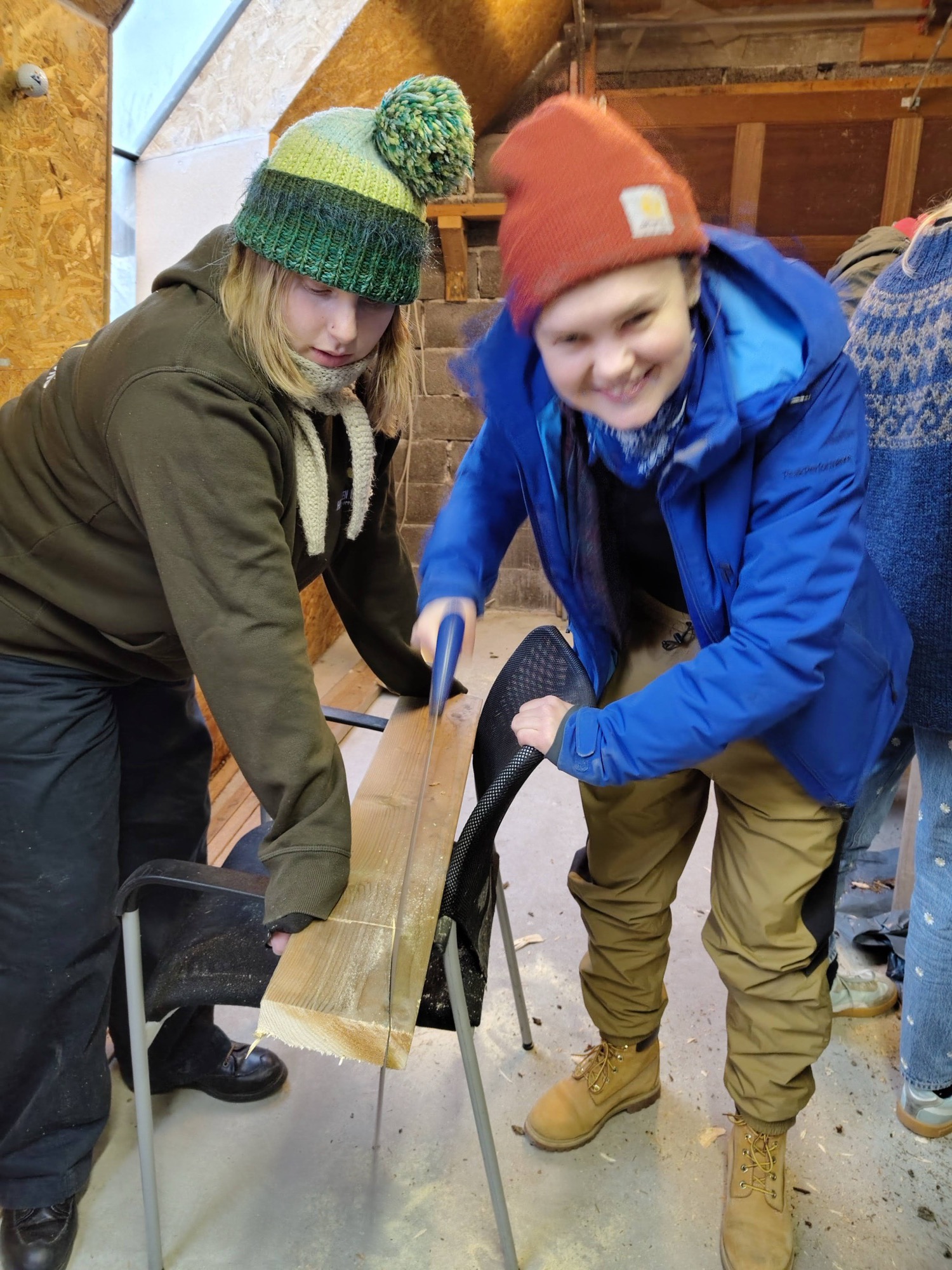
Woodworking & Sustainable Craft
Build and carve in wood.
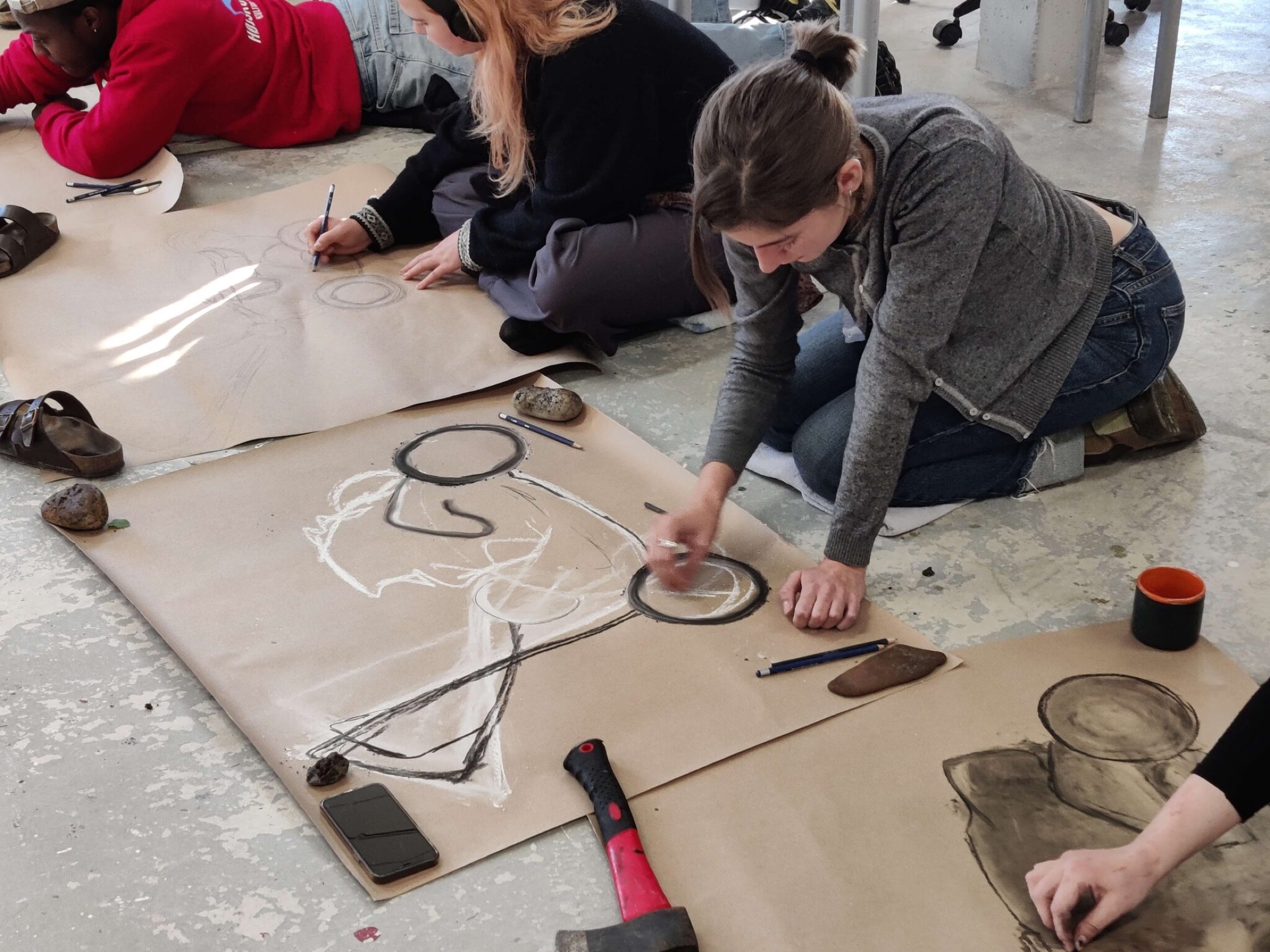
Art & Creativity
Draw, experiment and exhibit.
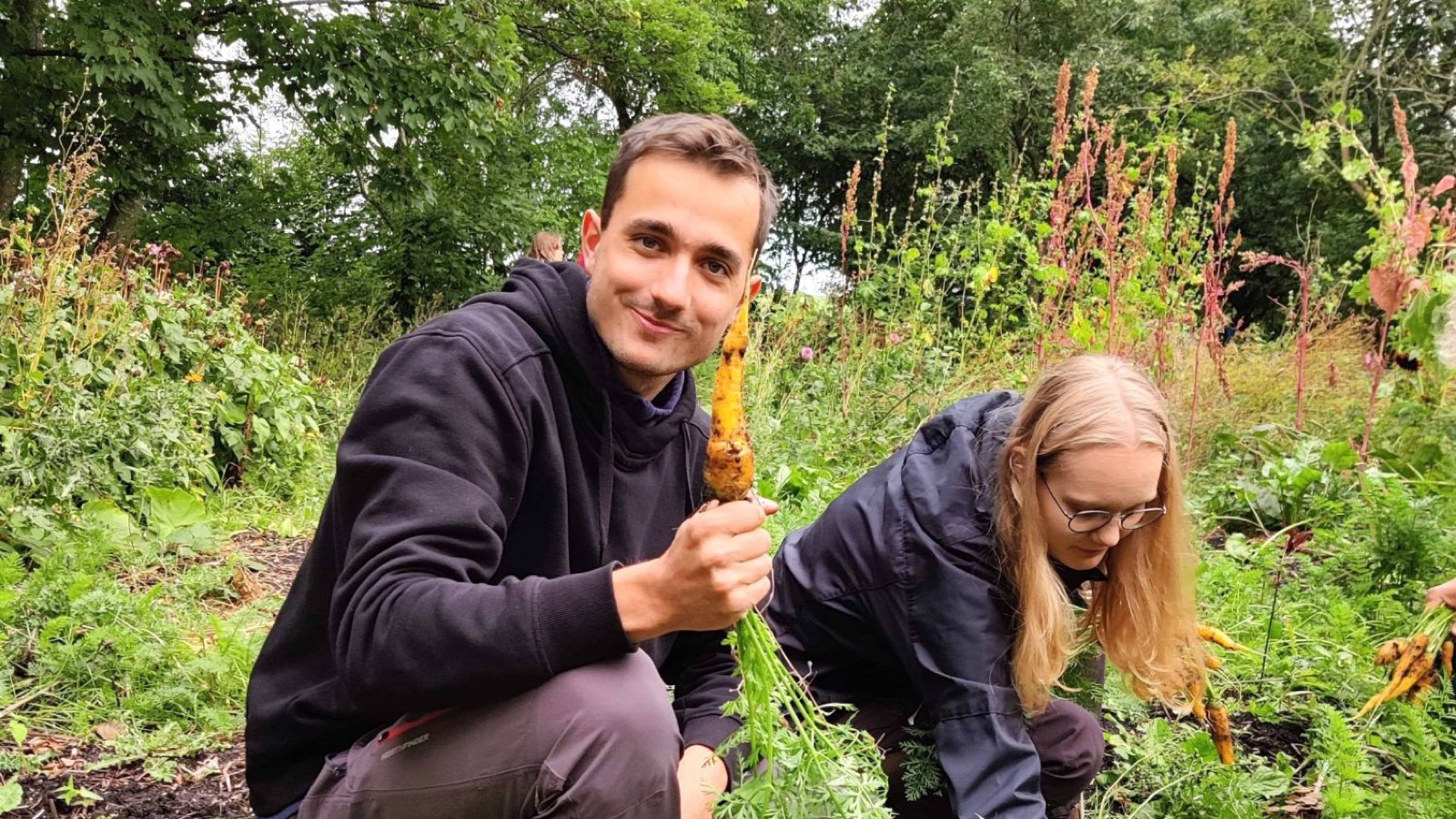
Permaculture
Grow food and learn about wild food.
5 · Underviseren
Your teacher in Willow Work & Basketry
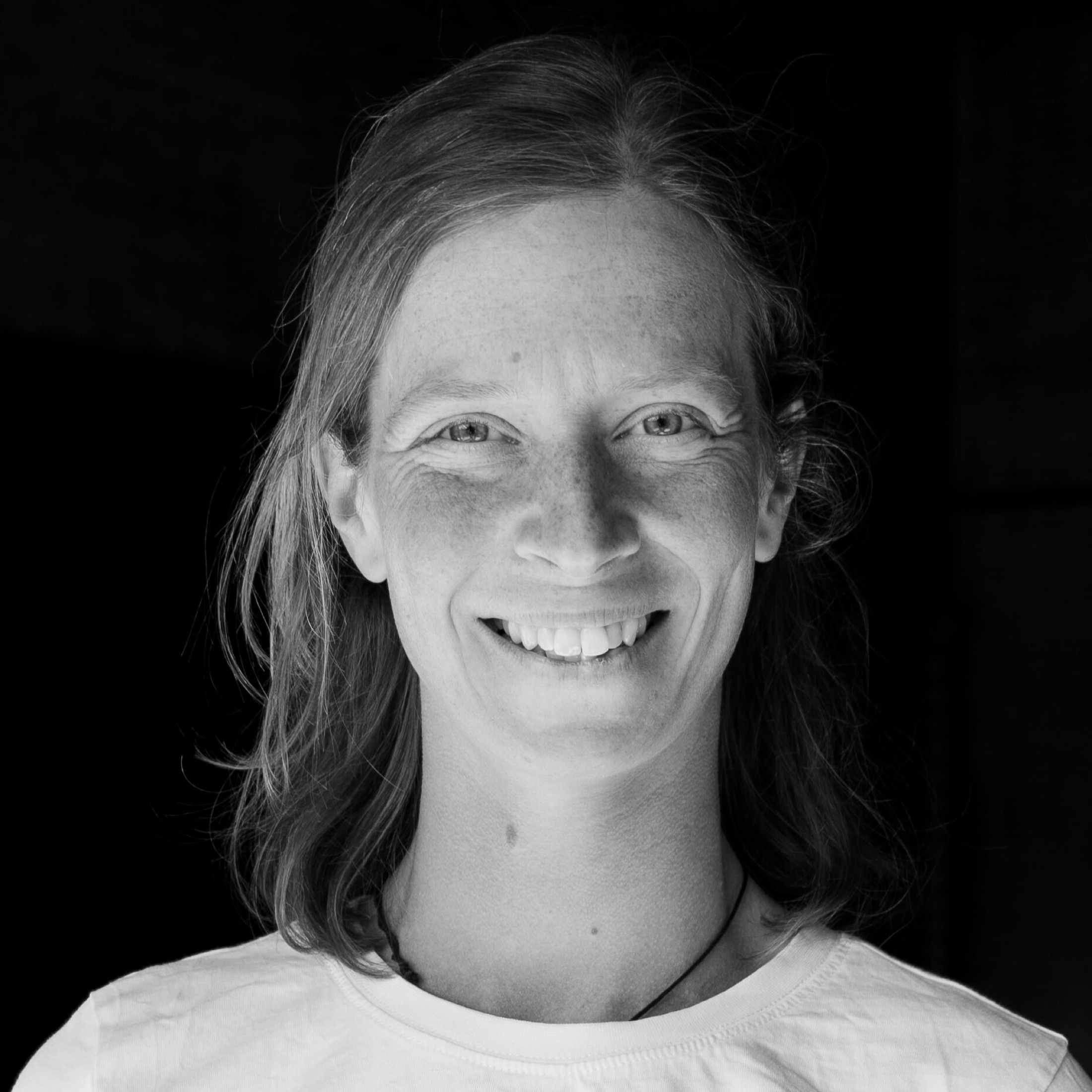
Maja Ingemann Nielsen
Maja is a passionate basket maker and outdoor person. She has a three-year education as an outdoor guide from Bø in Norway and many years of experience from højskoler and from her own business, MIN Håndkraft, where she combines outdoor life with crafts in wood and willow.
She loves the craft and the joy of making beautiful, useful baskets with nature's own materials, and she also leads the school's short course in willow basketry (in Danish).
“I love weaving willow baskets because it lets me make useful and beautiful things using only nature's materials, simple tools and my own hands.” (translated from Danish)
7 · Spørgsmål og svar
Questions and answers about Willow Work & Basketry
How much willow work is there in a normal week?
Willow Work & Basketry takes up all of Friday: 9.15–11.45 and 13.30–15.15 in both periods.
Can I take willow work as a subject on a long stay?
Yes. At Højskolen Mors Willow Work & Basketry is a main subject on the long stays, so you can immerse yourself in the craft a whole day a week.
Do I need to have woven before?
No. Both beginners and experienced weavers are welcome, and the teaching is in English. You start by weaving a classic round basket with a handle and build on from there.
What do you learn in Willow Work & Basketry?
You learn to weave a round star base, insert the stakes, several kinds of side weave and a solid flat border. You also learn about growing and harvesting willow and get inspiration for other natural materials.
What kinds of baskets can you weave in willow?
Baskets in all sizes, colours and shapes, for example a mushroom basket, picnic basket, knitting basket, laundry basket and baskets for the home.
Where does willow work take place at Højskolen Mors?
In Sneglehuset (the Snail House), the school's willow workshop. It is a wooden building with large windows and a terrace all the way round.
Why is willow a sustainable material?
Willow grows fast and gives long, strong and supple rods year after year. A willow basket can last for many years and, when its time comes, can become part of nature again.
Who teaches Willow Work at Højskolen Mors?
Maja Ingemann Nielsen, a trained outdoor guide from Bø in Norway who runs the business MIN Håndkraft, making crafts in wood and willow.
Does Højskolen Mors also have a short willow course?
Yes, but the short courses are in Danish. Kurveflet i pil (willow basketry) is a one-week course led by Maja Ingemann Nielsen. It runs 25 April – 1 May 2027.
How do I get to Højskolen Mors?
We pick you up at Snedsted Station if you come by train, and at Nykøbing Mors bus station if you come by bus. See how to get here.
How much does a stay with Willow Work cost?
The price is the same whichever subjects you choose and depends on the length of your stay. See the current prices under Fees and how to apply. International students can apply for a scholarship, but only a limited number are available.
8 · Praktisk
Terms, price and virtual tours
Places are open for international students on the autumn 2027 term, which starts on 8 August 2027. The spring terms are full, but you can join the waiting list.
Send an email to apply ›See Sneglehuset, where you will weave, on a virtual tour from home before you choose.
Book a virtual tour ›We pick you up at Snedsted Station or Nykøbing Mors bus station, and as a student you can use the school's cars.
How to get here ›9 · Afslutning
Start at Højskolen Mors
Autumn 2027 · open for international students
Send an email to applyor see your week first